We provide ERP solutions, including online trials, deployment and installation, system implementation consulting, technical and business support, and custom development services.
With nearly 10 years of ERP solutions development and implementation experience, we are familiar with enterprise business processes and help companies quickly build ERP solutions that fit their own management needs.
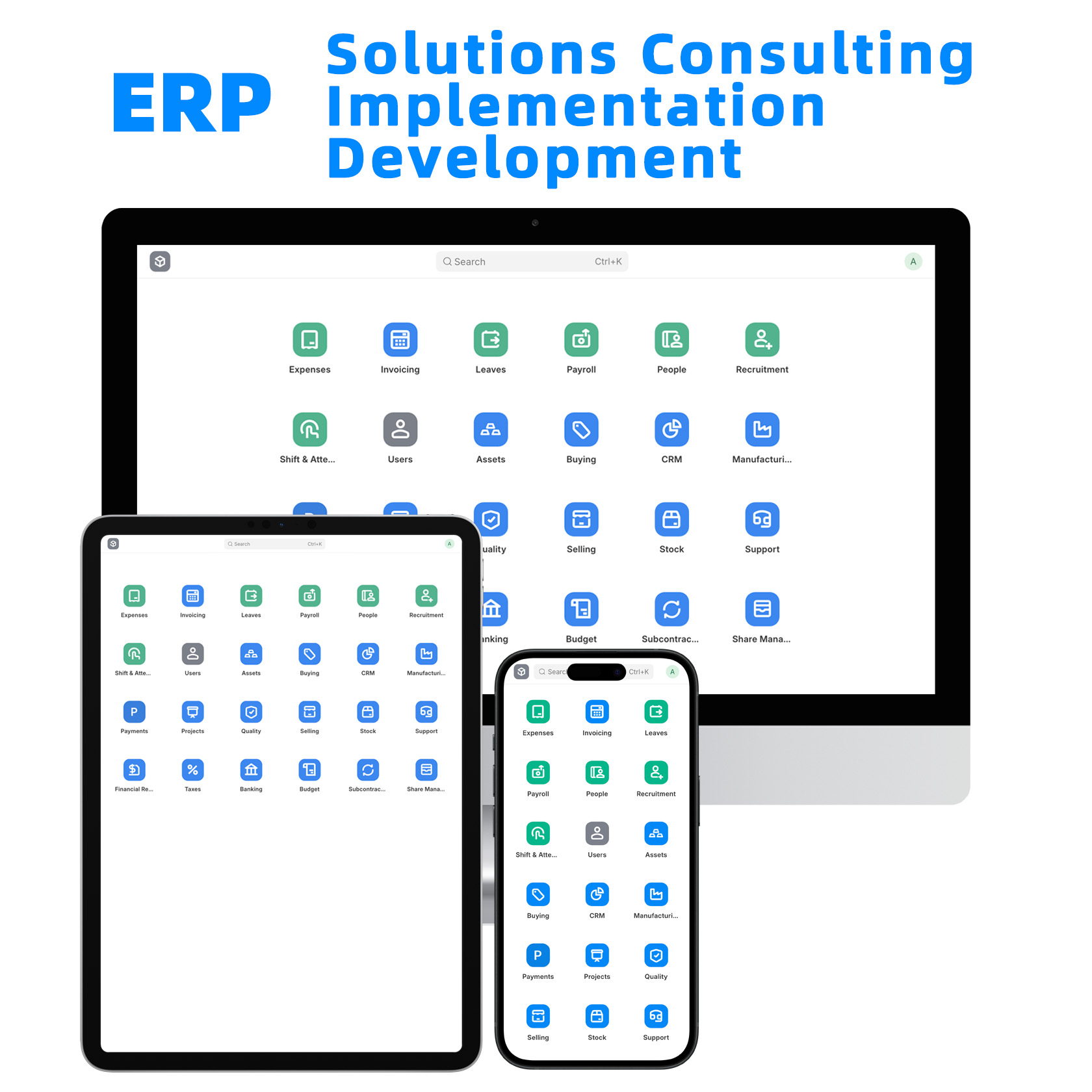
Implementing an ERP system is a critical undertaking that can transform the way a business operates, streamline processes, increase productivity, and drive growth. To ensure seamless integration of an ERP system with business operations, it is essential to develop a comprehensive and well-planned implementation strategy.
Enterprise Implementation Strategy
Enterprise-wide ERP implementations often involve complex processes and configurations. To ensure a successful rollout, the following key steps should be followed:
1. Requirements Assessment
Work closely with the ERP consulting team to comprehensively evaluate the business needs and challenges.
Identify core pain points, process bottlenecks, and strategic objectives that the ERP system should address.
2. Customization and Configuration
Customize and configure the ERP system according to business requirements.
Map existing workflows to the new system and design user-friendly interfaces to enhance employee adoption and experience.
3. Data Migration and System Integration
Plan and execute data migration from legacy systems to the ERP system, ensuring smooth transition and data integrity.
Test and integrate other business systems to ensure seamless information flow across the organization.
4. Change Management and Employee Training
Develop a comprehensive change management strategy to help employees adapt to the new system.
Provide training sessions to ensure employees can use the ERP system efficiently, reducing resistance to change.
5. Testing and Quality Assurance
Conduct thorough testing of the ERP system to identify and resolve potential issues.
Ensure system stability and full functionality before going live.
6. Go-Live and Post-Implementation Support
Execute a controlled go-live process to ensure a smooth system transition.
Provide ongoing technical support and optimization to ensure long-term system stability.
Our Value Proposition
As a professional ERP consulting company, we have extensive experience in ERP implementation. Partnering with us can provide the following advantages:
1. Expertise and Experience
Deep understanding of unique business needs and ability to tailor ERP solutions aligned with strategic objectives.
Insight into industry challenges and ERP functionalities to ensure scientifically designed and practical systems.
2. Efficient Project Management
Clearly planned project milestones, timelines, and objectives to ensure timely implementation.
Minimized risk of delays and budget overruns.
3. System Customization and Integration
Customize modules based on business requirements and efficiently integrate with existing systems.
Enable seamless information flow across departments.
4. Training and Change Management
Provide comprehensive training to help teams adapt to the new system and manage organizational change effectively.
5. Continuous Support
Offer long-term technical support and system updates to safeguard the ROI of the ERP investment.
6. Risk Mitigation
Identify potential issues in advance and implement solutions to reduce implementation risks.
Core Business Processes in ERP Systems
ERP systems cover all key business areas and help organizations manage operations efficiently. Examples of major business processes include:
1. Sales Management
Create sales orders, manage quotations and contracts.
Automate order approvals.
Generate delivery notes and invoices.
Track order status.
2. Procurement Management
Create purchase orders, manage supplier quotations and contracts.
Automate procurement approvals.
Track procurement progress.
Manage supplier payments and receipts.
3. Inventory Management
Track inventory levels and status.
Manage stock transfers and adjustments.
Batch management and traceability.
Automatically generate inventory reports and analysis.
4. Financial Management
Bookkeeping, accounting, and financial reporting.
Manage payments, receivables, and taxes.
Budgeting and cost control.
5. Human Resources Management
Employee information and payroll management.
Attendance, leave, and training management.
Performance management and recruitment.
6. Customer Relationship Management(CRM)
Manage customer information and communications.
Track sales opportunities.
Manage customer support and service requests.
7. Manufacturing and Production Management
Track manufacturing orders and production progress.
Material Requirements Planning(MRP).
Quality control and traceability.
8. Project Management
Assign project tasks and track progress.
Resource management and cost analysis.
Generate project reports.
9. Service Management
Manage service requests and work orders.
Allocate technicians and resources.
Track service progress and response times.
10. Reporting and Analytics
Automatically generate financial, sales, inventory, and other reports.
Analyze business performance and key metrics.
Customize reports and dashboards.
ERP system modules and functionalities can be flexibly enabled based on business type and objectives, helping enterprises optimize processes, enhance information sharing, and increase management transparency—ultimately supporting sustainable business growth.